Why not just use robust AAC?
“[W]hen children only have access to complex solutions that require the child to navigate to various screens to locate vocabulary, expressive grammar development is necessarily delayed due to challenges in locating words.”
Binger, Harrington & Kent-Walsh (2024)6
Clinicians often recommend starting with a robust AAC, typically a symbol-based grid providing access to tens of thousands of nouns, verbs, adjectives, etc.
The rationale is that a child's language may grow explosively, and if you start with a system with too few words, they end up having to learn the “motor plan” for a whole new system all over again, which is painful.
My problem with this approach is that it leaves a lot of kids behind, particularly when it comes to autism.
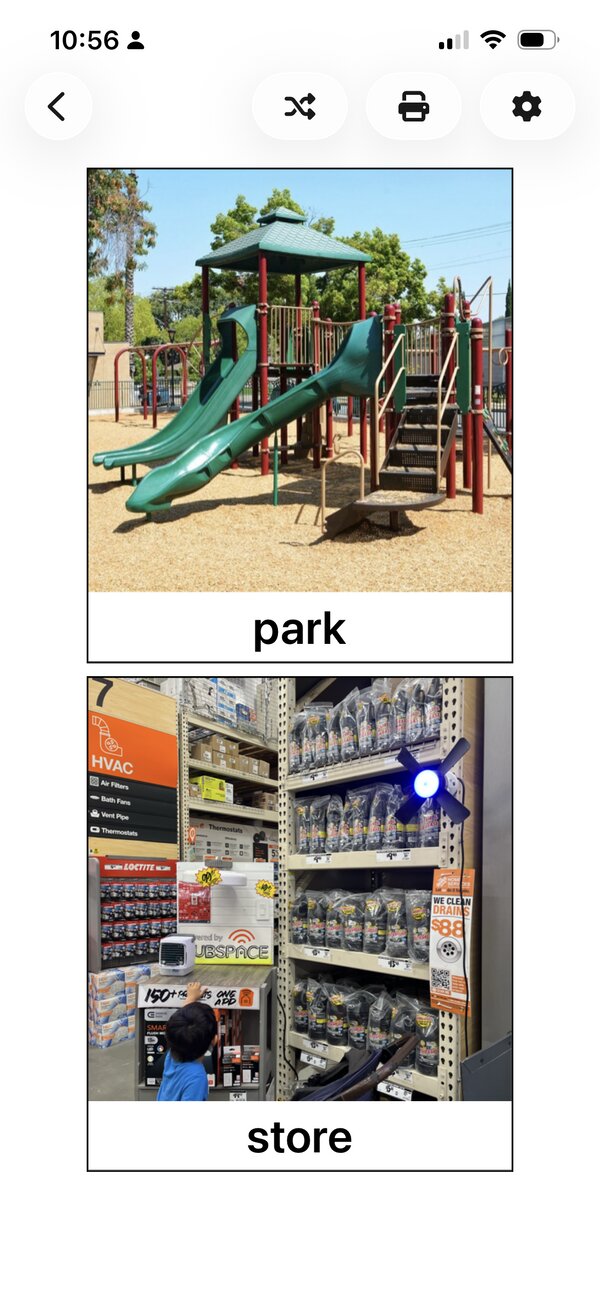
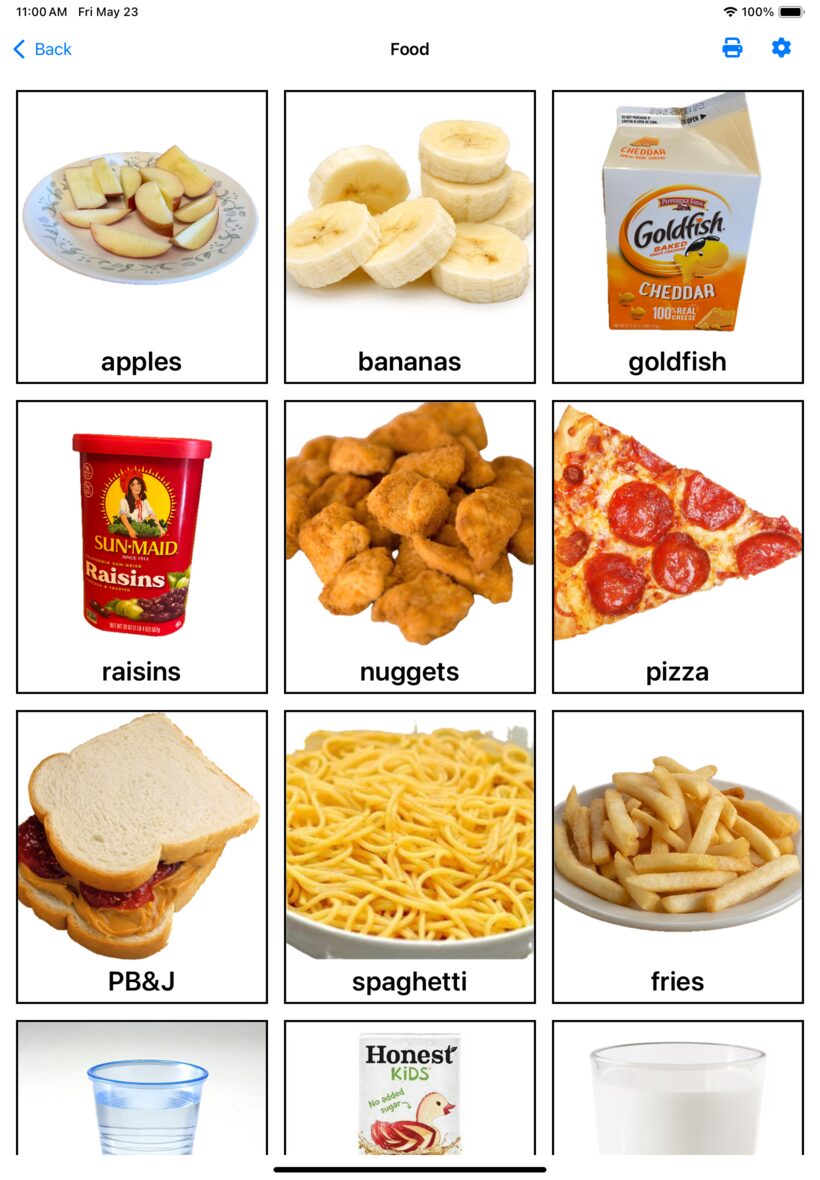
Challenges in social communication mean they need extra motivation to communicate. It's useful to have big photos of desired foods, toys, people, places, and experiences easy to access. But in robust AAC, these are typically deprioritized, reduced to small symbols and put in fringe folders.
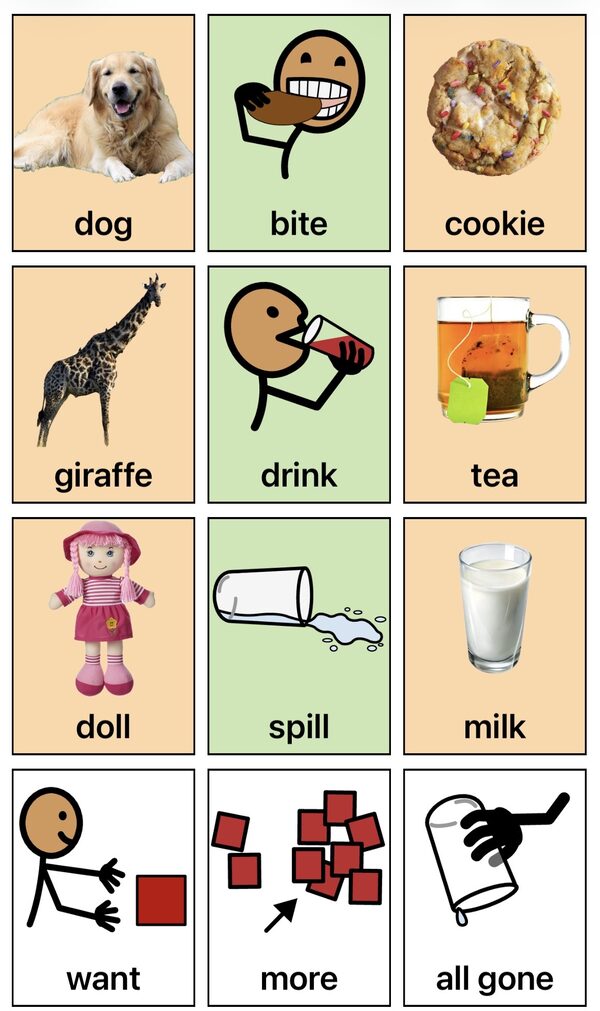
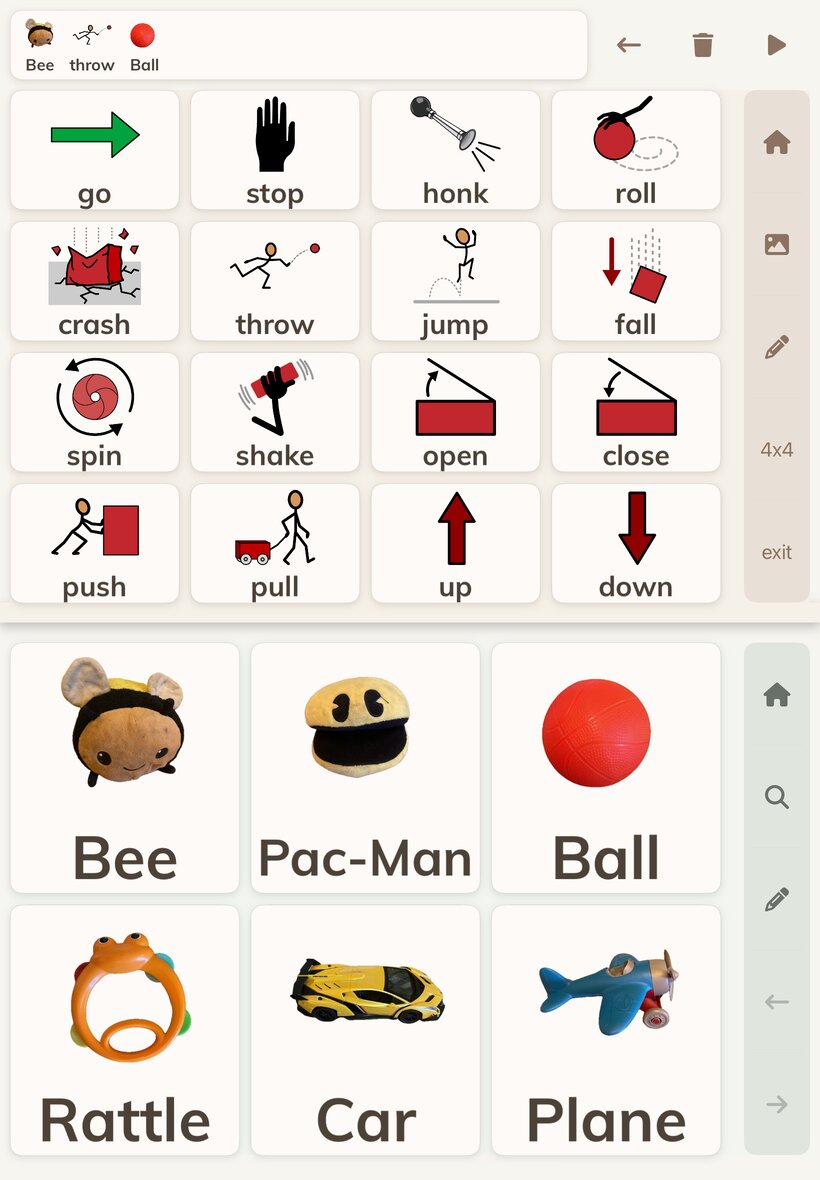
Delays in language mean these children need practice combining nouns, verbs, and adjectives. In robust AAC, these are typically found on separate pages, and a lot of back-and-forth navigation is needed to put sentences together. What is put front and center instead are high-frequency “core words,” which are hard to use for language building.
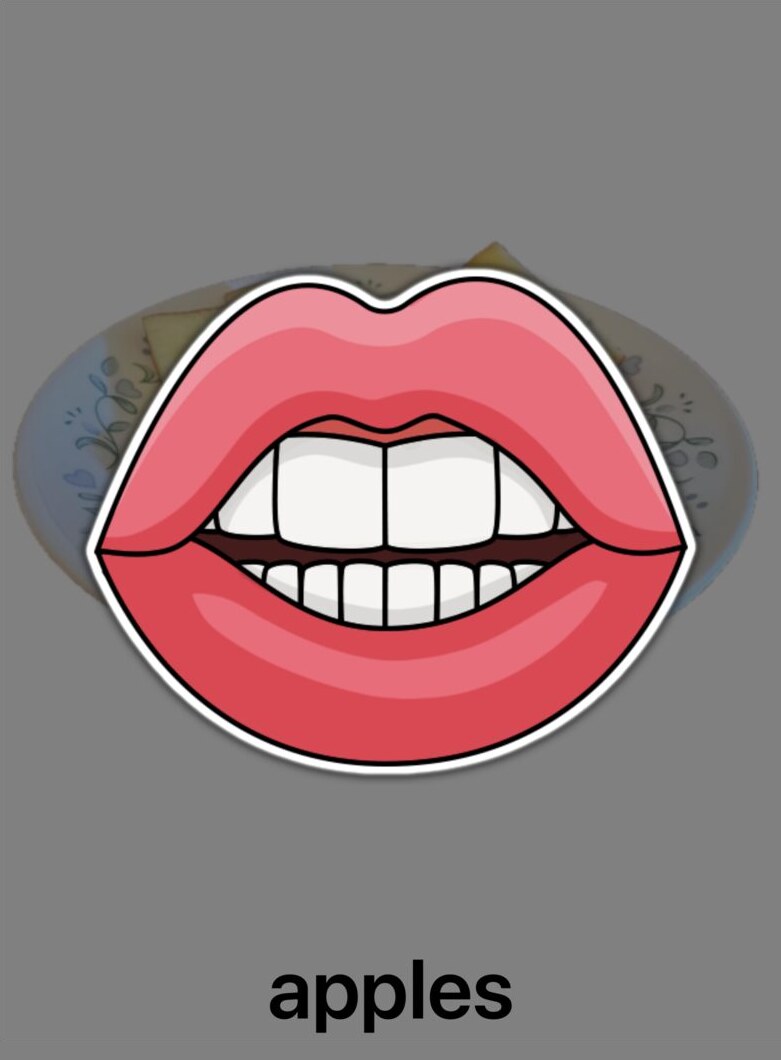
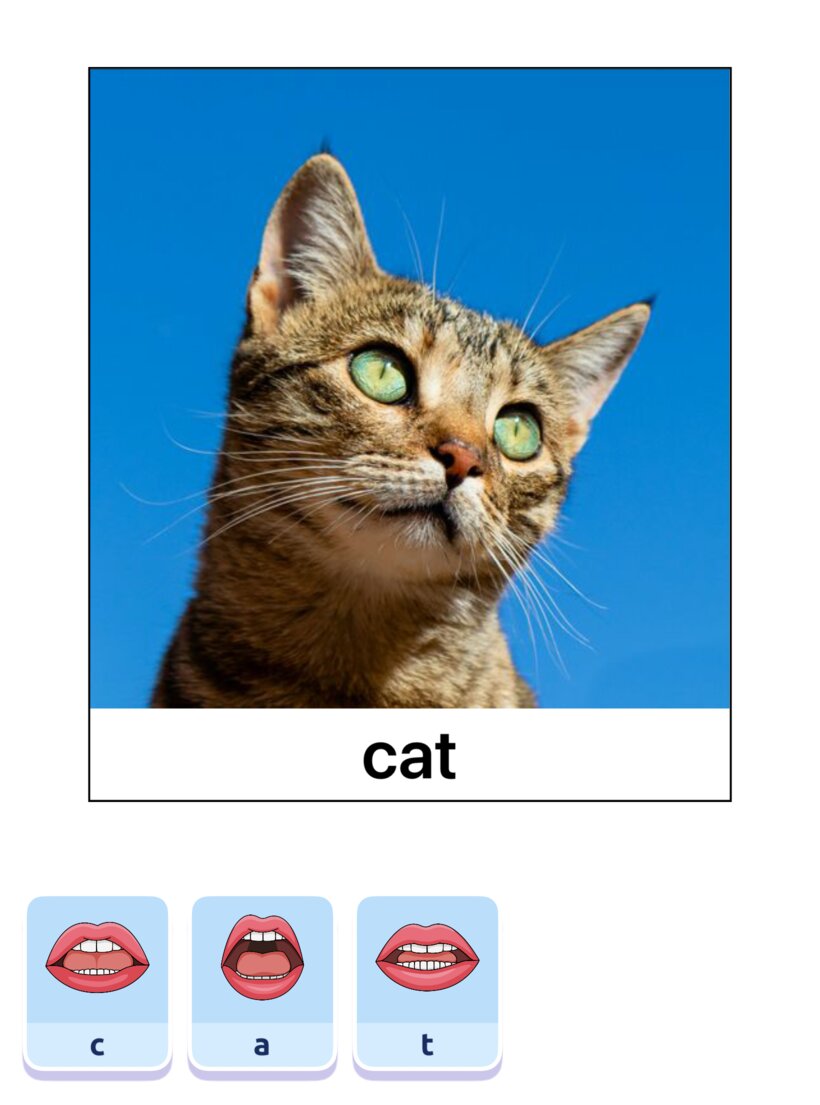
Visual Choices is not a robust AAC. But it is not limited. It is something different, a developmental AAC. It develops social communication and language skills, using choice boards, activity boards, dual-pane AAC, sign language, mouth motions, visual phonics, printable boards, and more, along with plentiful parent guidance.
Many children end up talking. Others who do not find Visual Choices AAC helpful in making more effective use of their robust AAC system.
Won't this make them not want to talk?
A common idea is that talking is effortful and requires practice, so if an easier way to communicate is provided, children will end up doing that instead of talking, and talking won't develop.
It makes sense, but it is not true. Instead, what people see is that extra methods of communicating, especially provided early, make talking more likely to emerge.7
In one randomized trial, toddlers taught to request with picture cards went from an average of 5 spoken words to 89 in six months, keeping pace with toddlers taught with a speech-focused method.8
The reason is that speech isn't just about the mouth, and how it moves around. It's about language, knowing what to say. And all these alternative methods of communicating, e.g. high-tech AAC, sign language, pointing, build up language. They train the brain to go from feeling something to thinking something to expressing something.
And once that is there, speech often follows.
Won't this be too much screen time?
Screen time is a problem for children, especially autistic ones. It displaces human interaction. It makes it so you don't have to do much to get a lot of rewarding output. It is quite challenging to do autism intervention with a child who is addicted to screens.
Visual Choices is not that kind of screen time, though. It is used to communicate with another person, enhancing rather than replacing human interaction. And a tap on the screen triggers a brief communicative output, rather than a 15-minute-long video. The output ideally results in back-and-forth interactions with a person.
A caveat is that children will sometimes treat AAC like a talking picture book rather than a communication device. Professionals disagree on what to do in this situation. Some say “device stimming” should be unrestricted, viewed as how babies babble when learning how to talk. Others say it is clearly not communicative and should be restricted. My view is children should be allowed to freely explore AAC apps on their own time, but that during teaching time, device stimming should be interrupted to model communicative use of the device.
Shouldn't I wait for an AAC specialist?
When my son turned 2, I asked his speech therapist about trying AAC. She said she wasn't qualified to oversee it and referred us to an AAC specialist.
It was several months before the specialist could see us. By then I'd already set him up with an AAC app myself, and he had started talking. She evaluated him and recommended a different system.
There's a reason for this lengthy process. Dedicated AAC devices are classified as durable medical equipment: long-term communication systems for nonspeaking people, costing insurers over $5,000 each. So the procedure is built around taking the time to get it right the first time.
We see AAC differently. It's a teaching tool, and you don't need permission to try a teaching tool. You probably won't hear about Visual Choices from an AAC specialist. That's not because it doesn't work—over a hundred SLPs subscribe to Visual Choices—but because their process is aimed at a different kind of system.